
In a Changing World, Animal Personality Can Mean Life or Death New Study Finds
14 April, 2026
Research
Sciences



In the high-stakes world of drug discovery, building a new medicine is a lot like microscopic architecture. To create the next breakthrough antibiotic or brain-targeting therapy, chemists must snap together fragile molecular building blocks. But for decades, one of the most useful chemical pieces has been notoriously stubborn, requiring conditions so harsh they often destroy the very medicine being built. Now, researchers have found a way to pick the lock.

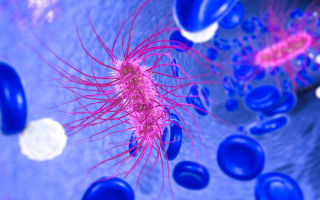
A team has uncovered how a common bacterial pathogen uses a single protein to quietly undermine the human immune system, by both shutting down key warning signals and blocking the cell’s ability to restore them. Published in Advanced Science, the study reveals a surprisingly precise, two-pronged strategy that helps bacteria gain the upper hand during infection, and points toward new ways of thinking about treatment in an era of rising antibiotic resistance.


Indoor air quality in modern buildings is increasingly difficult to maintain without high energy costs, and while vertical green walls offer a natural solution, their inconsistent performance and complex maintenance have limited widespread use. VertINGreen, developed by Hebrew University researchers, solves this by using AI, remote sensing, and plant data to both predict how green walls will perform before installation and monitor their health in real time—making them a reliable, efficient, and scalable tool for improving air quality and reducing energy consumption.


The Hebrew University is very pleased to launch the opening of its brand new faculty housing complex at the Edmond J. Safra Campus (located at the Saul and Joyce Brandman Residence Park).


A new international study reveals that adults who use disposable and non-disposable e-cigarettes differ in meaningful ways, and that those differences vary between countries. Comparing users in the United States and Israel, researchers found that flavor preferences, perceptions of harm, and purchasing habits strongly influence device choice. The findings suggest that effective e-cigarette regulation must be tailored to local patterns of use rather than relying on a single global approach.


A new study reveals that the human brain processes spoken language in a sequence that closely mirrors the layered architecture of advanced AI language models. Using electrocorticography data from participants listening to a narrative, the research shows that deeper AI layers align with later brain responses in key language regions such as Broca’s area. The findings challenge traditional rule-based theories of language comprehension and introduce a publicly available neural dataset that sets a new benchmark for studying how the brain constructs meaning.

The Hebrew University of Jerusalem has announced the extension of its "Academic Shield" program, specifically designed for women and men wounded during the "Iron Swords" war. The program includes a special grant of 2,000 NIS, along with a comprehensive package of benefits and accommodations for wounded veterans enrolling in undergraduate programs for the upcoming academic year (2026-2027/5787).
